

Bamboo Toilet Roll


Why Switch to Bamboo Toilet Roll
Traditional toilet paper is made from virgin wood pulp, which means trees are cut down and processed for something used once and flushed. Most standard rolls are wrapped in plastic that can't go in the recycling bin, bleached white with chlorine, and have no apparent environmental benefits.
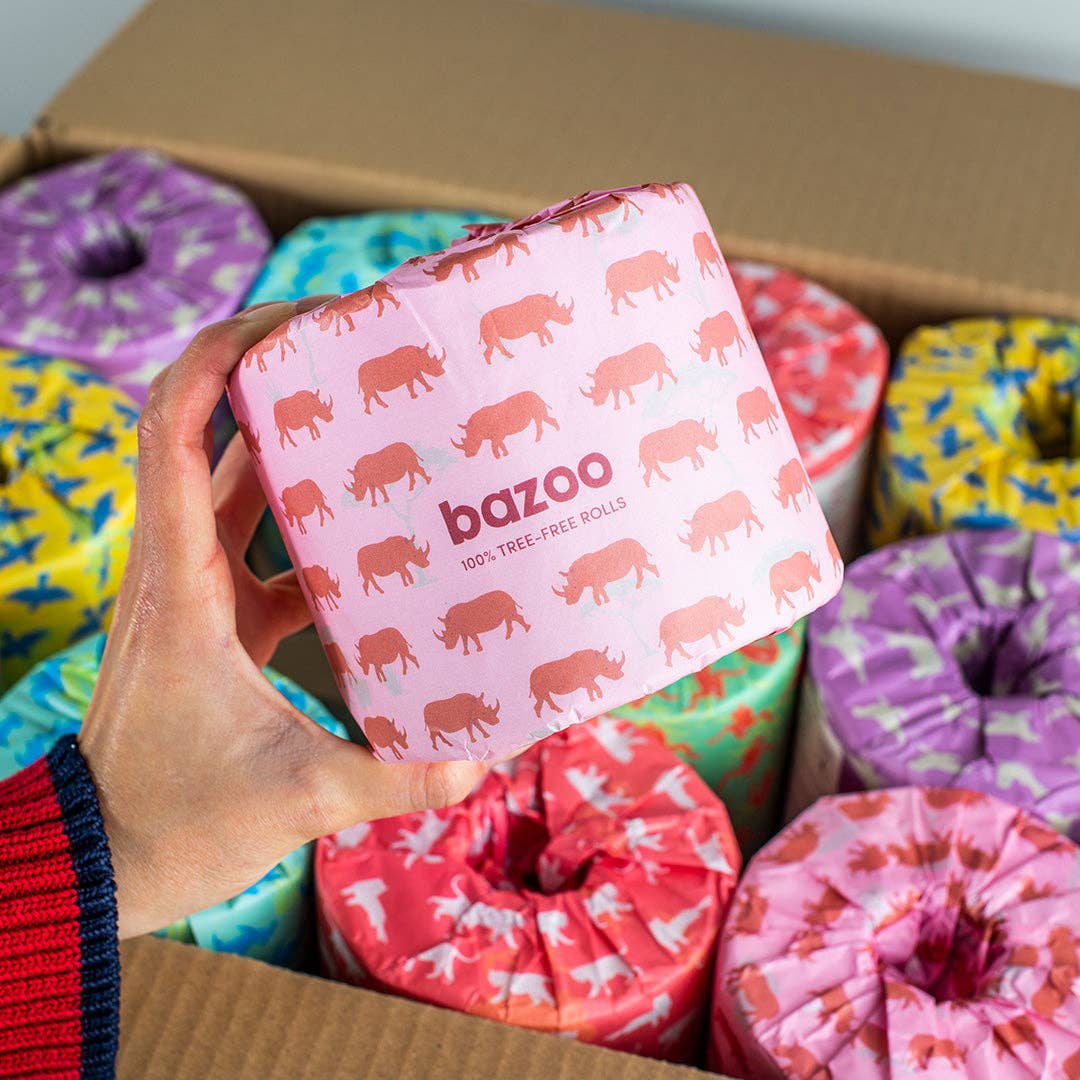
Bamboo toilet tissue is a sustainable alternative and combats deforestation. Bamboo is one of the fastest-growing plants on earth, reaching full maturity in three to five years compared to decades for hardwood trees. It's a genuinely renewable resource that regenerates naturally from its own root system, requires no pesticides and uses far less water to grow. Combined with plastic-free packaging and a cleaner manufacturing process, it's a simple swap.
Hypoallergenic Toilet Tissue for Sensitive Skin
Standard toilet paper often contains residual chlorine compounds, synthetic fragrances and optical brighteners. For anyone prone to sensitivity or irritation, those additives should be avoided.
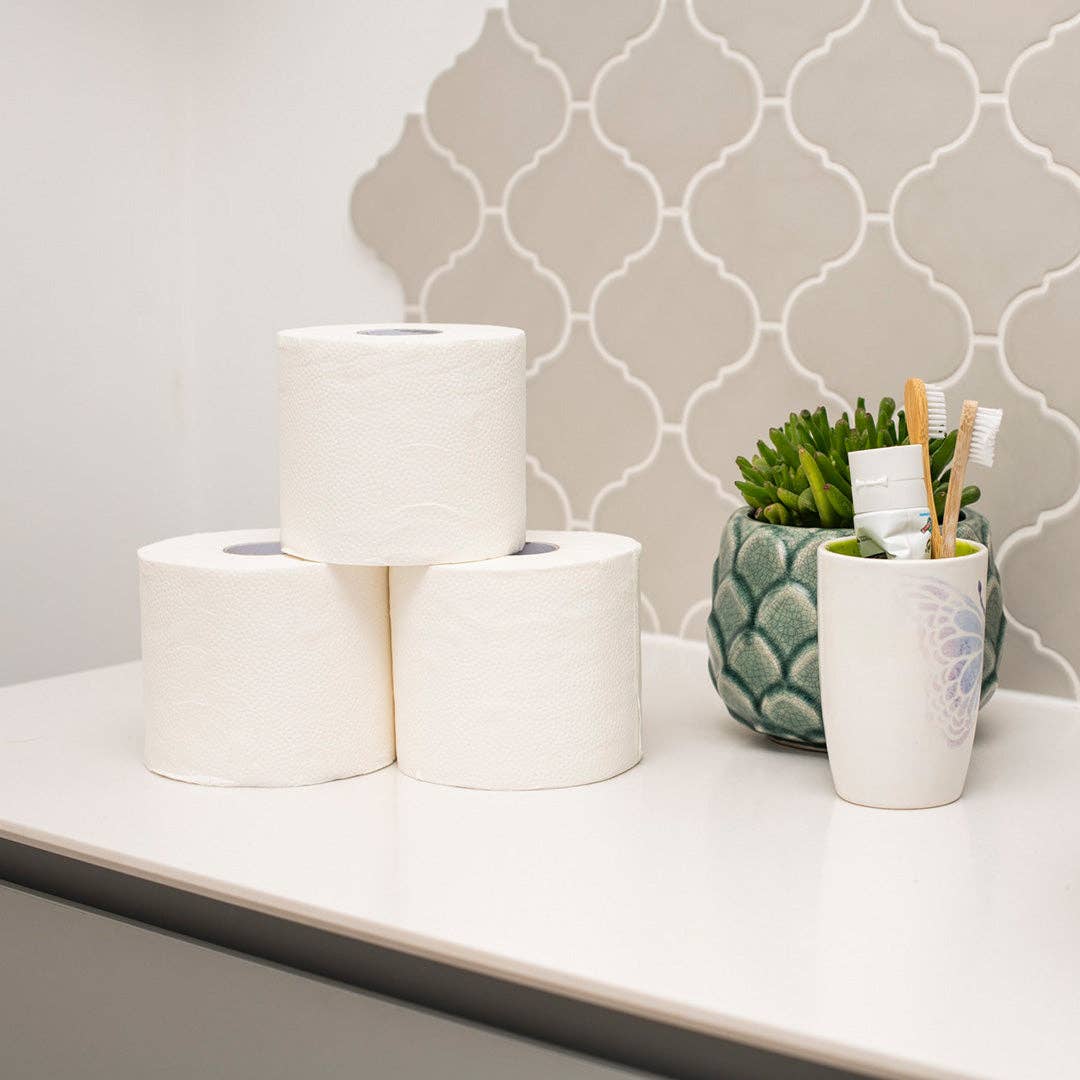
Bamboo toilet paper is naturally hypoallergenic and produced without the chemical processing found in traditional alternatives. Several products in the range are unbleached, keeping the roll its natural colour, rather than processing it to achieve the bright white finish most people are used to. The softness comes from the fibre itself rather than added treatments, making it a gentler option for everyday use and suitable for the whole household, including young children.
Why Bamboo Toilet Roll Costs Less Over Time
Double-length rolls mean fewer changes and less packaging overall, while the per-sheet cost of most bamboo options holds up well against mid-range conventional alternatives. Bulk-buying packs of 24 further reduces costs and the frequency of reordering.
Most bamboo toilet rolls in our range are 3-ply and double-length rolls with 370 sheets per roll, so they go further than standard supermarket equivalents - often at better value per sheet.
As the packaging is plastic-free, there’s nothing to dispose of that can't go in the recycling. Over the course of a year, a household making the switch will typically go through fewer rolls, produce less packaging waste, and spend less per sheet than expected.
Customer Reviews
What Our Eco-Warriors Say
Bamboo Toilet Roll FAQs
Is bamboo toilet roll better for the environment than conventional toilet paper?
Is bamboo toilet roll better for the environment than conventional toilet paper?
Is bamboo toilet paper safe for plumbing and septic tanks?
Is bamboo toilet paper safe for plumbing and septic tanks?
Does bamboo toilet roll feel different to regular toilet paper?
Does bamboo toilet roll feel different to regular toilet paper?
What is the difference between bamboo and recycled toilet paper?
What is the difference between bamboo and recycled toilet paper?
Is bamboo toilet paper biodegradable?
Is bamboo toilet paper biodegradable?
Featured In


